
The Family’s Shared Passage
The EmigrantsThis flow traces how the Nilsson children experience emigration as a move decided by adults and endured through the material conditions of the crossing.
increasing Bearing strength in each event
 decreasing
Bearing strength in each eventdecreasingChildren Left Out of the Decision
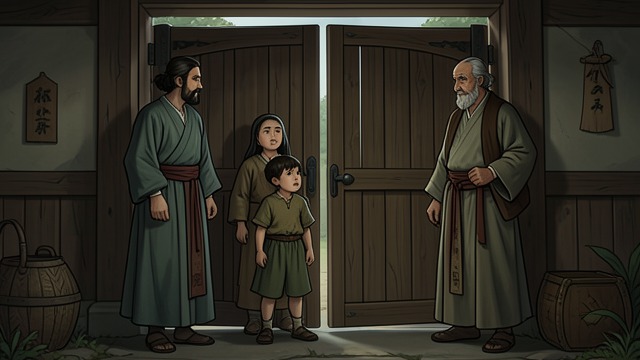
Children Left Out of the Decision
A choice made for them
Karl Oskar Nilsson and Kristina Johansdotter argue about whether their children should risk the voyage. The children are too young to understand or consent.
Parental responsibility
Each parent claims to act for their welfare: one sees opportunity, the other danger. The children become the emotional center of a decision they cannot influence.
The Loss of Anna
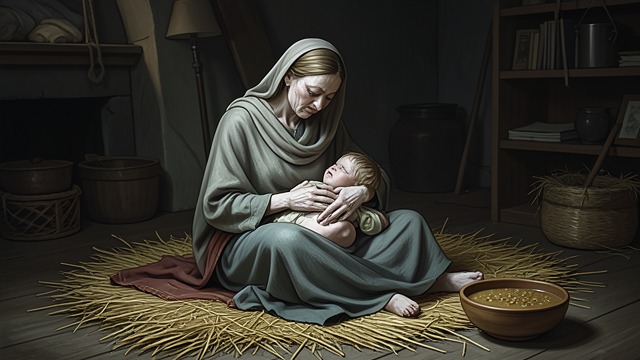
The Loss of Anna
Hunger reaches the children
Anna secretly eats too much barley porridge after a winter of famine food and dies in pain. Her death follows scarcity into the most intimate part of family life.
Grief changes the family
Kristina Johansdotter’s fear of risking the children’s lives at sea changes after losing Anna at home. The surviving children’s future becomes part of the decision to leave.
A Wagon Into the Unknown
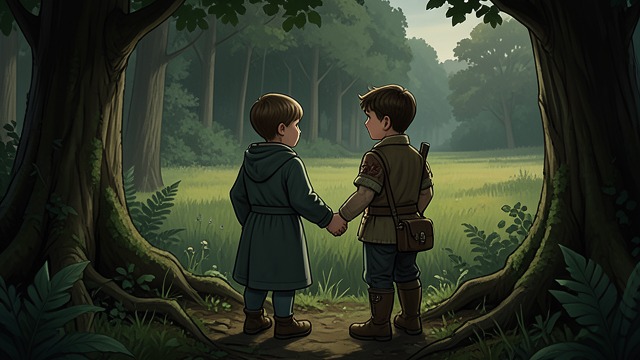
A Wagon Into the Unknown
A child’s limited understanding
Johan and Lill-Märta know they are traveling but cannot comprehend the distance or danger. Their parents carry them away from familiar places without being able to explain what awaits.
Farewell remembered by adults
The adults watch known streams, meadows, and homes disappear. The children’s dependence makes the journey a family bond as well as a parental burden.
Children in the Hold
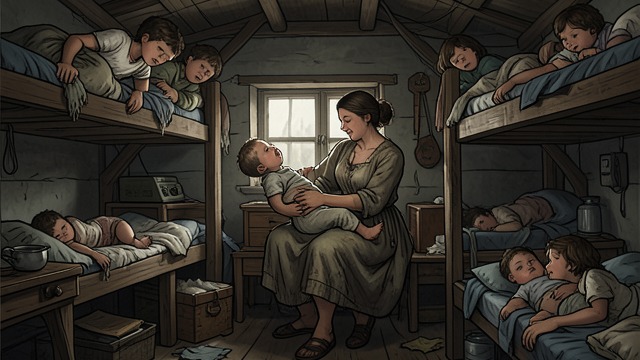
Children in the Hold
Confinement and illness
The children share cramped bunks, have little room to play, and miss milk and familiar foods. A cold and seasickness make the voyage harder for the mothers.
Care under pressure
Kristina Johansdotter comforts the children with promises of food and a house in America. She worries that she cannot guarantee what she is promising.
Walking Ashore Together
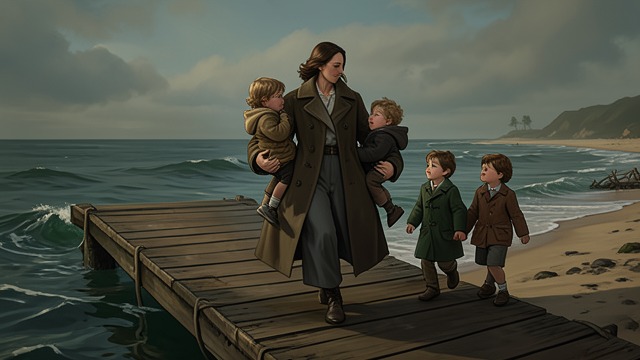
Walking Ashore Together
The children reach land
Karl Oskar Nilsson carries Harald, while Robert Nilsson watches Johan and Lill-Märta. Kristina Johansdotter insists on walking down the gangplank herself.
A family still together
The children are pale and weak, but all the survivors stand on shore as a family. The arrival preserves the bond that the parents risked the voyage to protect.
During Karl Oskar and Kristina’s debate about emigration
The famine winter, after the christening
April 4, 1850, during the departure
The opening weeks aboard the Charlotta
Midsummer Eve, 1850, at the New York pier
